Investment Strategy
A disciplined approach to an operationally intensive segment.
We acquire, improve, develop and operate small-bay industrial real estate. The strategy is deliberately narrow — depth in one segment rather than breadth across many.
What We Invest In
Small-bay and flex industrial real estate.
Industrial properties divided into smaller units — typically around 1,000 to 5,000 square feet — serving local and regional operating businesses.
In practice that means single assets, multi-building parks and portfolios of small-bay, flex, light industrial and contractor-oriented industrial product. We consider stabilised assets, repositioning and lease-up situations, development and expansion sites, sale-leasebacks and joint ventures.
We do not pursue big-box logistics, and we are not a self storage operator. Both are adjacent to what we do; neither is what we do.
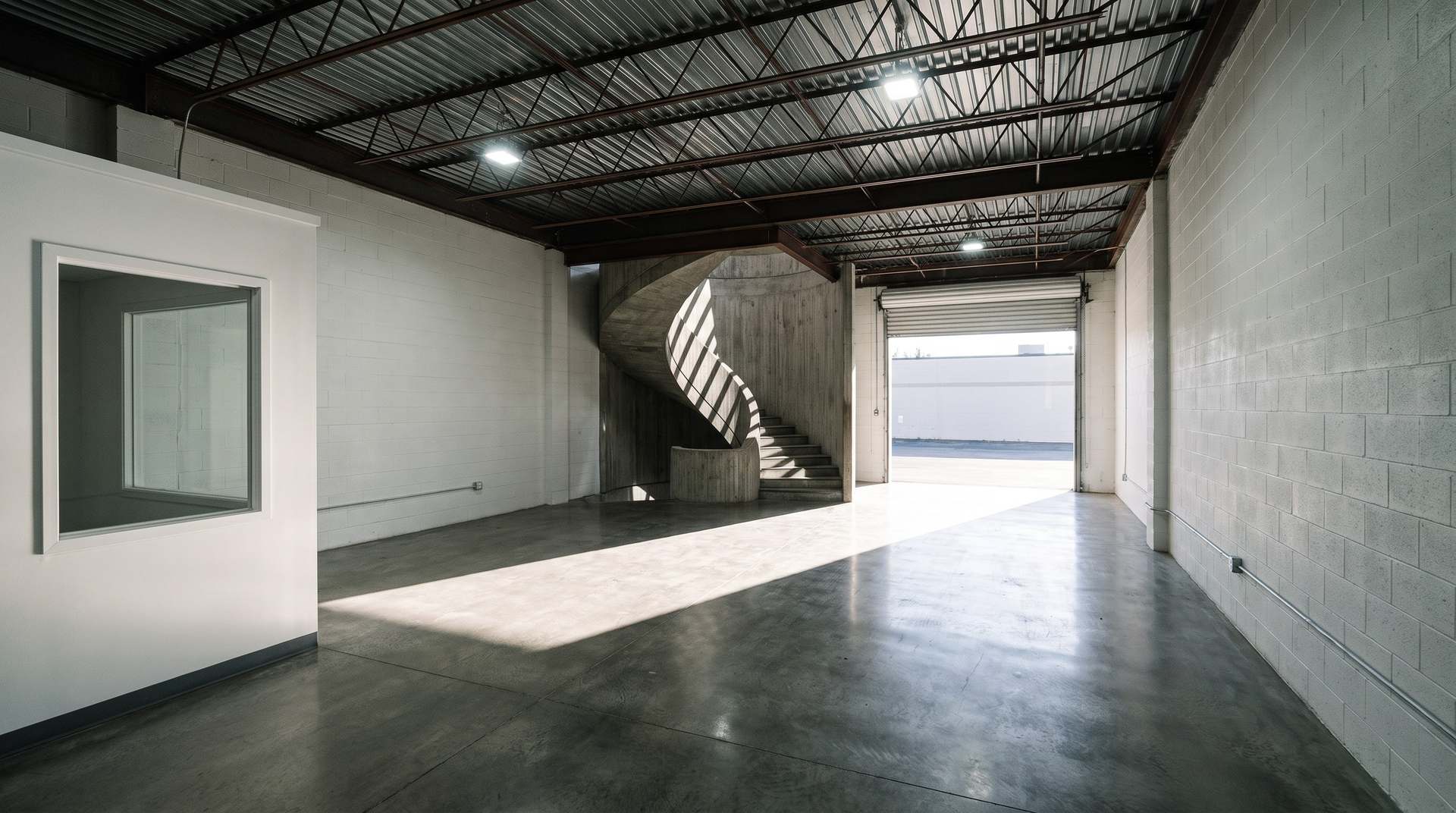
What We Buy
Functional, right-sized industrial space serving local operating businesses.
Why We Invest
Demand is broad and local. Supply cannot easily respond.
The rationale is structural rather than cyclical. It rests on a demand base generated by local economic activity and a supply side constrained by construction economics.
4.8%
Vacancy for industrial properties under 150,000 SF
0.5%
Small-bay under construction as a share of existing stock
40%+
Rent growth for suites under 50,000 SF since 2020
80%
Of shallow-bay inventory built before 2000
Source: Corebridge Financial, “Light Industrial Outlook: Small Bay, Big Play” , June 2025.
Source: CBRE, “Shallow-Bay Industrial Availability Remains Tight Amid Strong Demand” , March 24, 2026.
Favourable segment conditions do not underwrite an asset. Basis, execution and operations do.
Tenant Base
A fragmented, diversified ecosystem of local businesses.
Our income does not depend on one industry, one occupier or one supply chain. It depends on the breadth of business activity in the markets where we own.
This diversity is a defining feature of the segment. It also means the operating model has to be built for many small relationships rather than a few large ones — which is precisely why the segment has remained under-institutionalised.
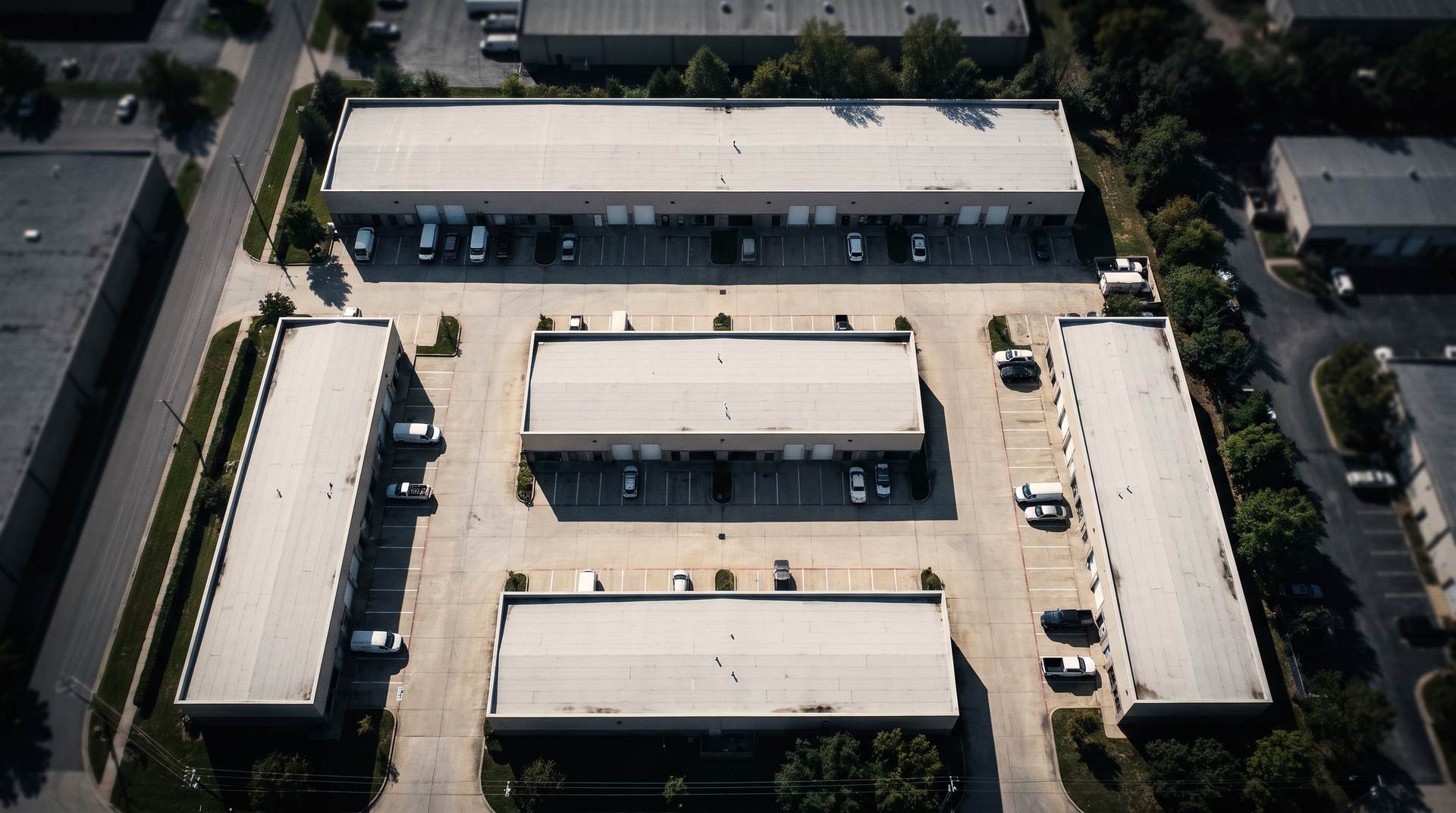
Portfolio Aggregation
Building density within a market, so operating leverage accrues across a cluster.
Property Economics
How the economics differ from large-format industrial.
Described conceptually. Actual performance depends on the asset, the market and the price paid.
01
Smaller unit demand
The addressable tenant base for a 2,500 SF unit is materially wider than for a 25,000 SF unit. More businesses need small space than large space.
02
Rent per square foot
Smaller units have historically achieved higher rents per square foot than large-format space, reflecting the scarcity of functional small units.
03
Tenant diversification
A building with fifteen tenants across ten industries has a different income profile from a building with one tenant and one expiry date.
04
Leasing velocity
A deep local tenant pool can support re-leasing without depending on a single national requirement coming to market.
05
Replacement cost
Where achievable rents do not support new small-format construction, existing functional stock is difficult to replicate.
06
Operational intensity
More tenants means more work. That work is the barrier to entry and, we believe, the source of the return.
No target returns, distribution schedules or offering terms are presented on this website. Nothing here should be read as a projection of investment performance.
Value-Creation Framework
Eight levers, applied deliberately.
We believe returns in this segment are earned through operations rather than assumed through market movement. These are the levers we control.
- 01
Acquisition
Buy at a basis that does not require heroic assumptions. We underwrite to achievable rents and realistic operating costs, and we are willing to pass.
- 02
Physical Improvements
Roofs, drive courts, lighting, façade, life-safety and building systems — the work that makes a building leasable and keeps it that way.
- 03
Unit Optimisation
Configure the unit mix to match the demand we actually observe in the market, rather than the mix the building happened to inherit.
- 04
Leasing
Professional, priced, marketed leasing with consistent terms — replacing the handshake-and-a-sign approach common in fragmented ownership.
- 05
Operations
Centralised management, maintenance standards and responsive tenant service applied across the portfolio.
- 06
Branding
A recognisable standard so that a tenant choosing between two buildings can tell which one is professionally run.
- 07
Data
Enquiry, leasing and operating data used to price units, shape unit mix and inform the next acquisition.
- 08
Portfolio Aggregation
Build density within markets so operating leverage accrues across a cluster rather than a single asset.
Property Profile
Our general criteria.
- Location
- Growing US markets with durable small-business formation, infill or well-connected suburban positions, and proximity to the customer base tenants serve.
- Property
- Small-bay industrial, flex, light industrial and contractor-oriented industrial. Single assets, multi-building parks and portfolios.
- Unit Profile
- Primarily units of roughly 1,000 to 5,000 SF, with grade-level roll-up access, adequate power and functional clear height.
- Opportunity
- Stabilised assets, repositioning and lease-up opportunities, development and expansion sites, sale-leasebacks and joint ventures.
- Value Creation
- Operational improvement, professional leasing, capital improvements, unit optimisation and management — not reliance on market movement alone.
Holding Philosophy
Patient ownership over transaction volume.
We approach these assets as an owner-operator with a long horizon, not as a trader seeking a quick repricing.
Operational improvement in small-bay industrial takes time. Re-leasing a rent roll to market, completing a capital programme, establishing a standard of management and building a reputation among local businesses are multi-year activities. A holding period that respects that reality is, in our view, part of the strategy rather than a constraint on it.
It also aligns us with the tenants. A contractor signing a lease is making a decision about where to base their business. Stability of ownership matters to them, and their stability matters to us.
Investors & Capital Partners
Discuss the strategy with us.
We are glad to walk through how we underwrite this segment, what we look for and how we think about operating these assets.